
Off-road bumper: front or rear with a winch plate?
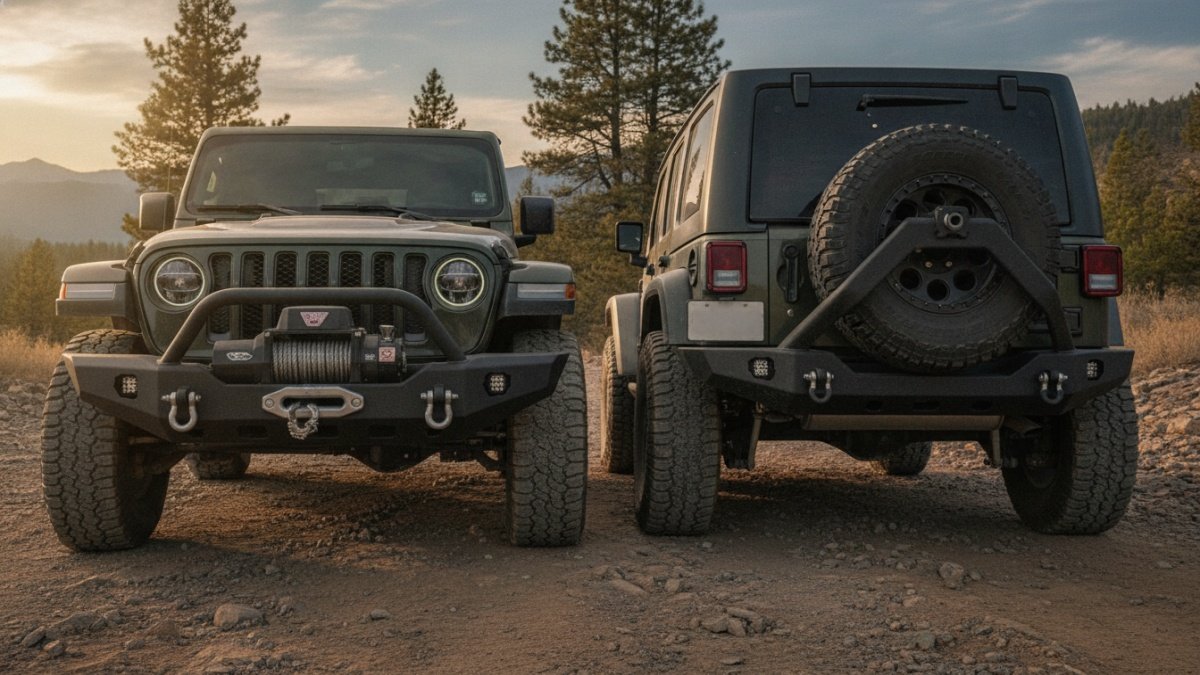
An off-road bumper is usually the first major modification to an off-road vehicle, and it's also the one that most often needs to be corrected. On the surface, it's simple: steel instead of plastic, front instead of rear. The challenges begin with the details, because the car's performance is determined by whether the designer included space for a winch and how much the whole thing weighs. In the workshop, we regularly remove bumpers purchased a year earlier because the owner realized there was no way to connect the winch or that the front end had sunk so low that the sills were picking up every stone.
What does a steel off-road bumper actually do in the field?
The factory bumper is a polypropylene shell with a foam insert, attached to a few plastic clips. While it's sufficient for everyday driving, off-roading is a complete failure. The steel box bumper transfers loads directly to the frame rails, improving not only impact resistance but also the vehicle's ability to be towed. The shortened stubby design also trims body overhangs and raises the approach angle, allowing the vehicle to climb onto off-road sills instead of resting on them with the plastic.
Before you evaluate a specific model, check out a few things that distinguish a load-bearing structure from a steel ornament:
If any of these items are missing from the product data sheet, consider it a red flag. Manufacturers who calculate structures for real-world loads provide this information themselves, as it's the most expensive part of the job.
How much does a steel bumper for an off-road vehicle weigh and what does it do to the suspension?
This number disappears from most guides, yet it's crucial. A steel bumper for an off-road vehicle weighs from about 30 kg in the shortened version without a winch to 80 kg with a full beam with a bull bar and integrated plate. Plus, the winch: a 4.5-ton model weighs about 27 kg with cable and rollers. All the ballast sits in front of the front axle, so it acts as a lever and loads the springs more heavily than simply adding the kilograms would suggest.
| Bumper variant | Weight with accessories | Front sagging on factory springs | Changing the angle of attack |
| Stubby without winch | 30-35 kg | 8-12 mm | improvement of about 1 degree |
| Mid-length with plate and winch | 55-70 kg | 15-25 mm | loss of 1 to 2 degrees |
| Full-length with bull bar and winch | 80-105 kg | 25-35 mm | loss of 2 to 3 degrees |
The approach angle is measured between the ground and a line drawn from the front tire's contact point to the lowest point at the front of the vehicle. Adding 70 kg lowers this point by 2-3 cm and simultaneously moves it forward, so you lose on both sides of the equation. The same off-roader that had a 33-degree approach angle on the factory suspension drops to around 30 degrees after installing a full beam with a winch, even though the steel supposedly improved drivability.
The remedy is high-load springs, sized for additional front axle loads ranging from 40 to 80 kg. Longer-stroke shock absorbers restore ride height and often add 40-50 mm of lift. Before you order front bumper for your model, find the declared weight in the description and calculate whether the suspension can handle it. Installation without spring adjustments is the most common reason why a car drives worse after modification than before.
Zderzak przedni 4×4 czy tylny, od którego zacząć?
The order is based on where the car really takes a beating. Of the ten orders, eight are for the front, with the rear added later, during the construction of the expedition vehicle.
Dlaczego zderzak przedni 4×4 wchodzi jako pierwszy?
Przód zbiera uderzenia od gałęzi, kamieni i zwierzyny, a za nim siedzi chłodnica, skraplacz klimatyzacji i osprzęt, którego wymiana kosztuje więcej niż cała przeróbka. Zderzak przedni 4×4 osłania ten pakiet i tworzy jedyne sensowne miejsce na wyciągarkę, bo ratowanie auta w zdecydowanej większości przypadków polega na wyciąganiu do przodu.
The second issue is the towing points. The factory threaded eyelet in the side member is designed for towing on asphalt, not for kinetic rope jerks, which can result in a momentary load exceeding twice the vehicle's weight. Shackle hooks welded into the steel bumper transfer this force to the frame, instead of tearing the threads out along with the sheet metal.
What does the rear bumper with hitch and wheel holder change?
The rear works differently. This allows for a departure angle when leaving a high sill and provides space for items that don't fit in the trunk. The 35-inch spare tire carrier removes about 40 kg of weight hanging under the frame from the chassis, freeing up space in the cabin.
Standard in expedition designs is an integrated ball hitch or socket for a kinematic hitch, canister holders and a second set of shackle points, useful when pulling backwards. Rear structures tailored to specific models They differ primarily in whether they retain the factory parking sensors and whether the wheel carrier opens with the tailgate. If you're budgeting for one item per season, the front wins.
Winch plate: why adding it later is a dead end?
The winch plate is not a shelf, but a load-bearing element that must transfer a force of 4-5 tons to the frame. The standard bolt spacing is 254 x 114 mm, or 10 x 4.5 inches, and fits most electric winches. The plate itself should be 6-8 mm thick and welded to the side ribs of the bumper; otherwise, it will bend along with the front of the structure under load.
This is where the most expensive purchasing mistake in this category comes in. A bumper without an integrated plate typically costs 400-900 PLN less at purchase, but the subsequent modification can cost between 800 and 2500 PLN at 2026 workshop rates. This involves removing the bumper, cutting out the front, welding in a plate with ribs, adjusting the mounts, and recoating because the zinc and paint must be reapplied. This adds 2-4 days of downtime, and on some models, the need to relocate the radiator or modify the air intake because the winch takes up space that wasn't planned for. The bill is higher than the additional cost for the version with the plate, and the manufacturer's warranty expires after the first cut.
How to choose a winch suitable for the plate and weight of the car?
The towing capacity is selected as twice the permissible gross vehicle weight. A 2.2-tonne off-roader requires a winch with a pulling capacity of at least 4.5 tonnes, while in regular mud, a 5.4-tonne winch is more sensible, as ground resistance can increase the actual load requirement by half. Using a pulley block doubles the pulling force at the expense of reeling speed.
Also check if the mounting plate fits the selected winch model in terms of the rope guide height. A roller set too low causes the rope to rub against the bumper edge, and a synthetic rope worn in one spot loses up to 40 percent of its strength.
Bull bar, sensors and inspection: what about homologation in Polish realities?
Most guides ignore this topic, which is crucial to the legality of the modification. Since October 20, 2007, frontal protection systems, or what we commonly call bull bars, can only be installed in vehicles homologated with such a system. This applies to cars first registered in Poland after that date, including older imported models. The bumper itself cannot be homologated separately from the vehicle, which is why some manufacturers register their products as winch mounts.
The diagnostician looks for sharp edges, protruding elements, obscuring lights and license plates, and changes in dimensions. Most cars pass inspection, but if a pedestrian is hit, the unapproved design is subject to expert review, giving the insurer a basis for recourse. Electronics are a separate issue: a rigid steel beam alters the deceleration characteristics detected by the crash sensor, so the airbag can deploy after a minor impact or with a delay in a real collision. Approved manufacturers address this with deformable arms that crumple in a controlled manner.
Before ordering, please ask yourself these four questions:
You'll find the answers in just a few minutes, and they can save you thousands of zlotys. A sensible sequence is as follows: first, the front end with a winch plate and springs sized for the winch's weight, then the winch itself, and only then the rear end when the car starts going on multi-day trips. Any other option will result in a second attempt at the same job.


Xtreme4x4
Proven parts for many car models. Fast shipping and professional service. We offer consumables, braking systems, suspension, and accessories. Choose the right parts conveniently, safely, and at a great price.
piotr@xtreme4x4.pl
